
Free Lessons
Improving the ending to a song
I talked last week about micro-decisions collectively making a big difference in music. Today, I want to give a practical example. In church this morning, I found myself playing a gentle and relaxed song that ended with this chord.
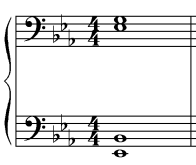
When I am playing music that is not intended to be bombastic and I see chords like this, I immediately change them. The thing about this chord that bothers me is the doubling of the Eb. Playing the Eb in the right hand is completely unnecessary.
Take a moment and play the chord as written and then play it without the Eb in the right hand. Do you notice the difference Doubling the Eb sounds unsophisticated and a bit clunky. Removing it makes the chord sound open and clean.
Some of you are thinking that I am obsessing about something that is insignificant but I do not think so. Removing this kind of doubling from your music will give you a better sound that almost everyone will notice. Few if any will be able to identify why you sound better but they will know that you do sound better.
It is not necessarily easy to change your playing if you double a lot of notes but you can remove a lot of the doublings over the course of a few months if you focus on it. Especially focus on light music such as invitations, communion services, or when you are playing underneath someone talking.
I don’t remember what I changed the chord to this morning, but I thought I might give you a few simple options here for that part of the keyboard. You are somewhat limited that low on the keyboard because the voicings have to be more open to avoid a muddy sound.
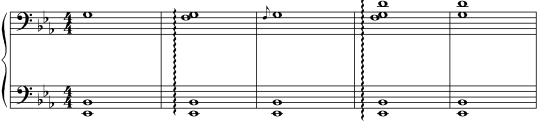
Some of these involve either adding the 2nd (9th) and/or major 7th to the chord. Play them gently and enjoy their dissonance. Note that I roll some of these chords to soften the effect and I use grace notes on the 2nd (9th) for the same reason.
These always work if you are playing the last chord of the song by yourself. They will even work underneath a voice or instrument as long as their last note is not the root (Eb). Stay away from the major 7th in that particular situation.